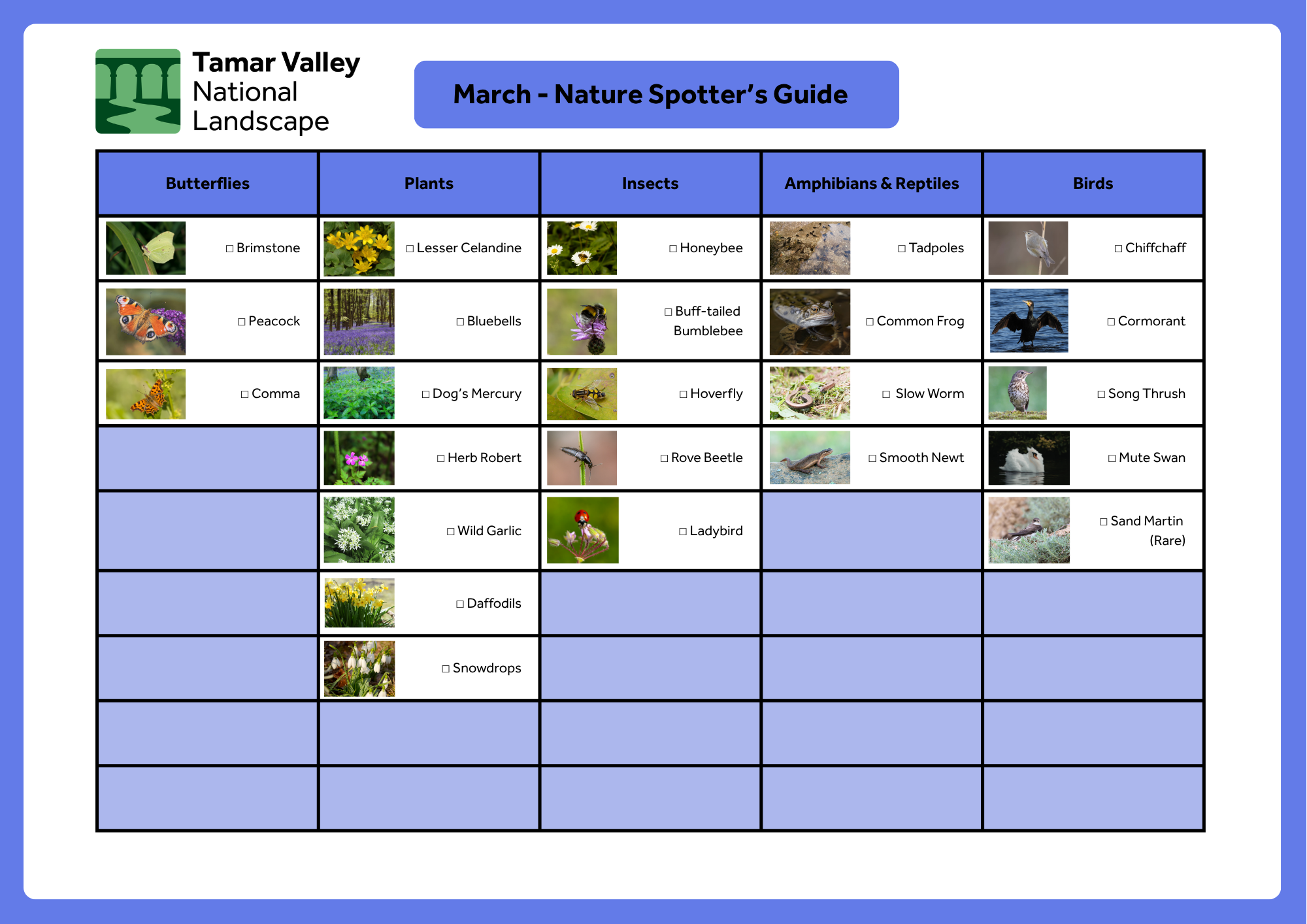
Each month, we’ll share a new guide showcasing the wildlife you can spot in and around the Tamar Valley, from seasonal favourites to some of our Special Species. These guides are designed to spark curiosity, encourage exploration, and help you notice the incredible nature that surrounds us. Whether you’re heading out for a walk or simply want to learn more about the valley’s changing seasons, our monthly guides highlight an easy, enjoyable way to connect with the landscape and discover something new.


Advice:
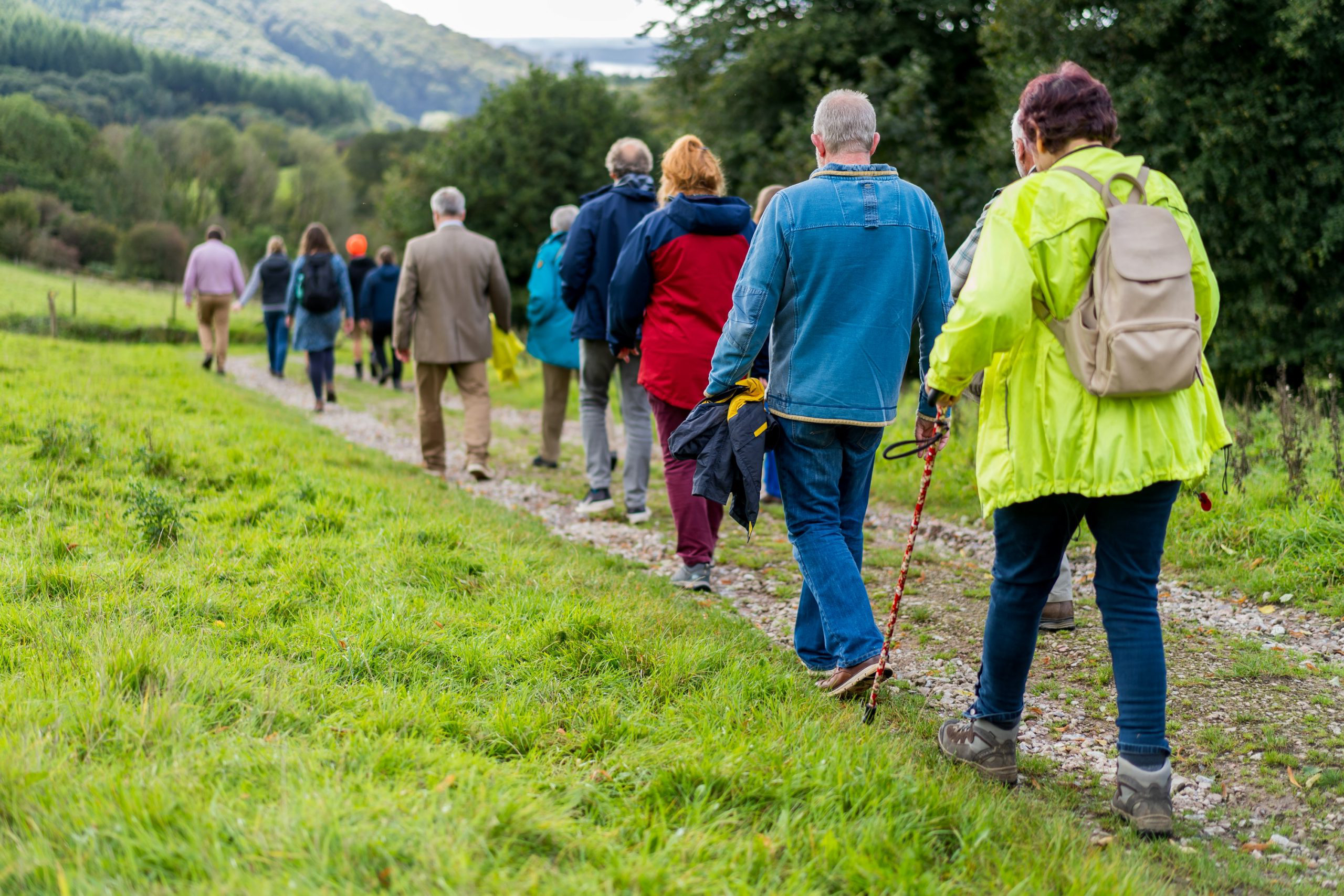
When looking for nature in the winter, it’s important to be safe. Here are some safety suggestions to consider before heading out:
- Dress for the weather with warm layers, waterproofs, gloves, and sturdy footwear to prevent slips on wet or icy ground.
- Check the forecast before heading out and avoid walking in high winds, heavy rain, or poor visibility.
- Stick to marked paths where possible, as winter mud, flooding, and hidden holes can make off‑trail areas unsafe.
- Be mindful of daylight. Winter days are short, so plan your route and allow plenty of time to return before dark.
- Carry a charged phone, a small torch, and a map or navigation app in case conditions change.
- Watch your footing on wet leaves, mossy stones, and frosty surfaces, which can be surprisingly slippery.
- Keep a safe distance from rivers and fast‑flowing water, as winter levels can rise quickly.
- Respect wildlife by observing quietly and avoiding disturbance, especially during harsh weather when animals need extra energy to survive.
- Do not eat any mushrooms or wild plants unless you are fully trained in identification. Many species are toxic and can look very similar to edible ones.
- Let someone know your plans if you’re heading out alone, including your route and expected return time.
- Bring snacks and warm drinks to stay comfortable and maintain energy levels.
- Stay on accessible terrain and turn back if conditions feel unsafe, as winter landscapes can change quickly.


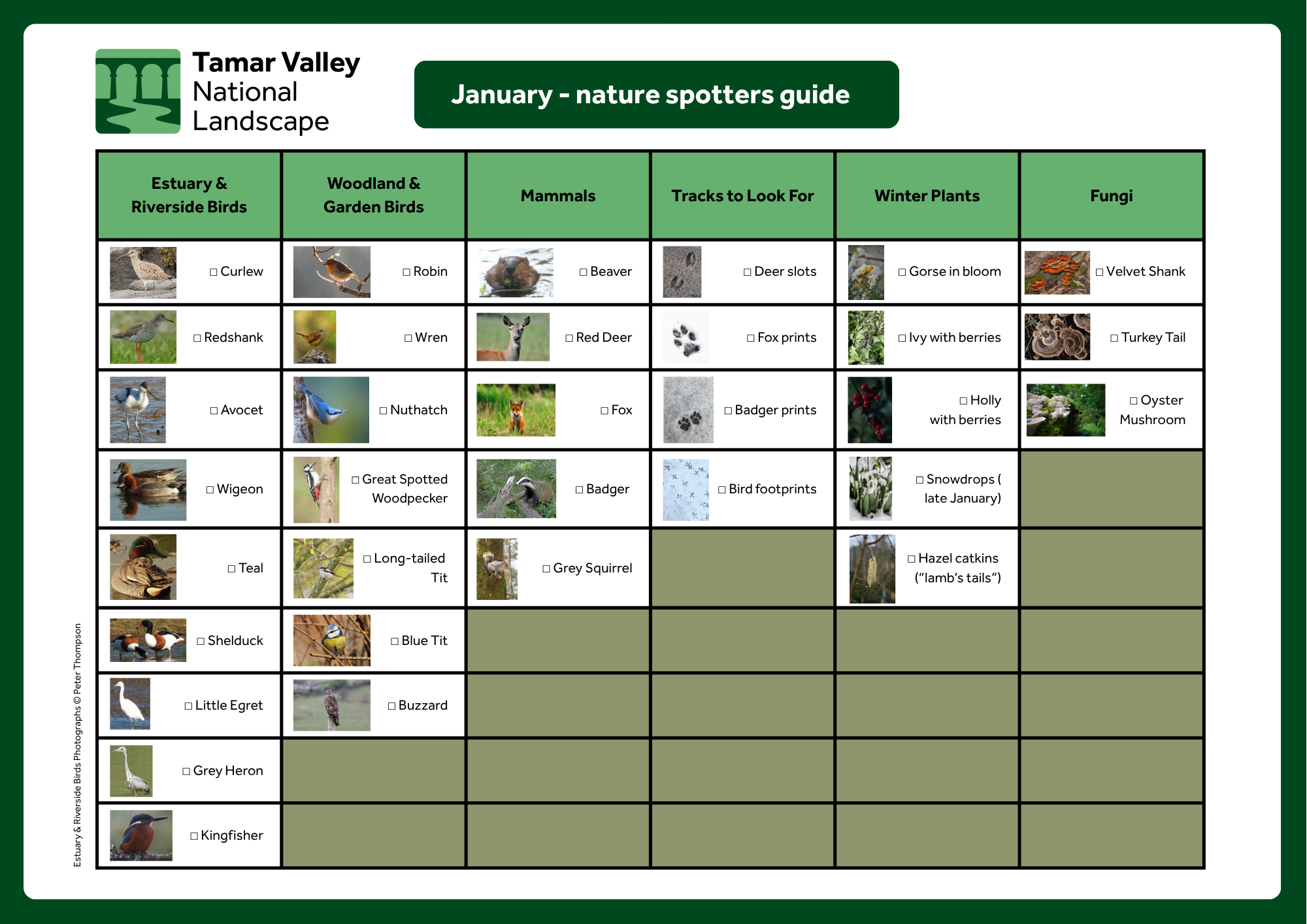
Nature Spotter's Guide for January 2026
January in the Tamar Valley has a quiet, understated beauty. The landscape feels still on the surface, yet there’s plenty happening if you know where to look.
Bare trees reveal sweeping views across the valley, winter sunlight catches on the river, and mosses and lichens glow vividly in the damp air. Birdlife is especially active at this time of year. Winter thrushes feed in orchards and hedgerows, while robins, wrens, and great tits stay busy around gardens and woodland edges. Along the river, you might spot a flash of kingfisher blue or hear the call of a Teal duck. Early catkins begin to appear on hazel, hinting at the first signs of spring, and hardy plants such as snowdrops may start pushing through the cold ground.

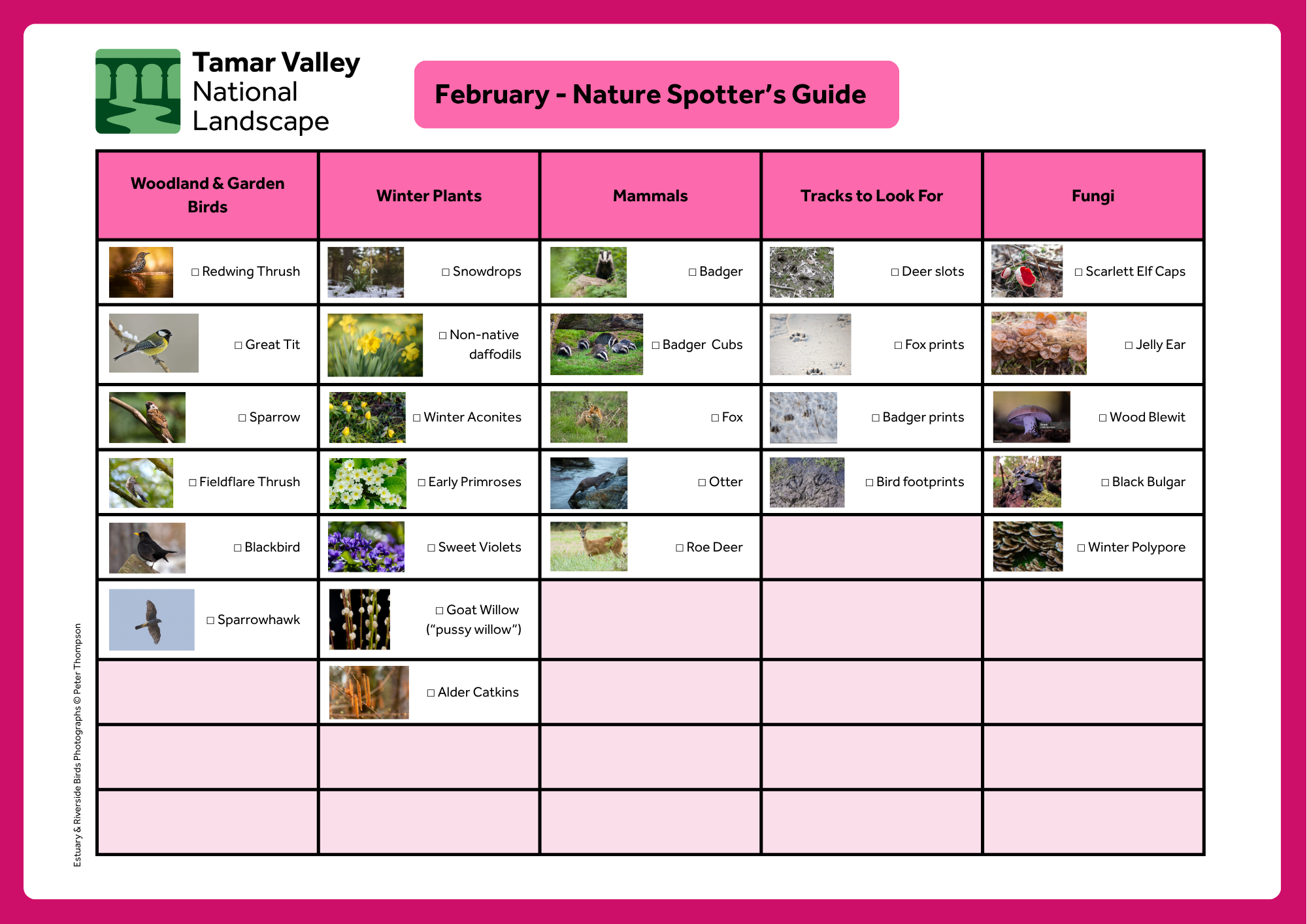
Nature Spotter's Guide for February 2026
February in the Tamar Valley remains shaped by winter, with damp ground, bare branches and changeable weather, but early signs of spring are beginning to appear. Birds such as blackbirds, sparrows and great tits remain active along hedgerows and woodland edges, while alder and goat willow catkins start to show colour against otherwise leafless trees. Snowdrops, winter aconites and the first primroses brighten banks and gardens, standing out against muted winter tones. Mammals are mostly unseen but often revealed by tracks in soft ground, and fungi continue to thrive on fallen wood and shaded banks, adding subtle colour to the valley as the landscape slowly prepares for the season ahead.

Nature Spotter's Guide for March 2026
March in the Tamar Valley sees daylight increasing, temperatures rising gradually, (sunshine!) and the landscape beginning to change. Hedgerows show the first consistent signs of growth, with fresh leaves and early flowers appearing along banks and paths. As the daylight lengthens, resident birds become more active and vocal, with robins, wrens and blackbirds establishing territories and beginning to nest, while birds of prey such as buzzards and kestrels are more frequently seen over open land. Amphibians are plenty active, with frogs and toads gathering at ponds and ditches to spawn, and newts returning to the water after winter. Invertebrate life also stirs, with early butterflies, bees and other pollinators emerging on mild days, signalling the gradual re‑building of the food web.