

Sign up here for FREE periodic updates from the Tamar Valley National Landscape, packed with the latest news, events, volunteering opportunities, and project updates. Simply add your name and email address below and your seasonal ebulletin will be emailed to you.
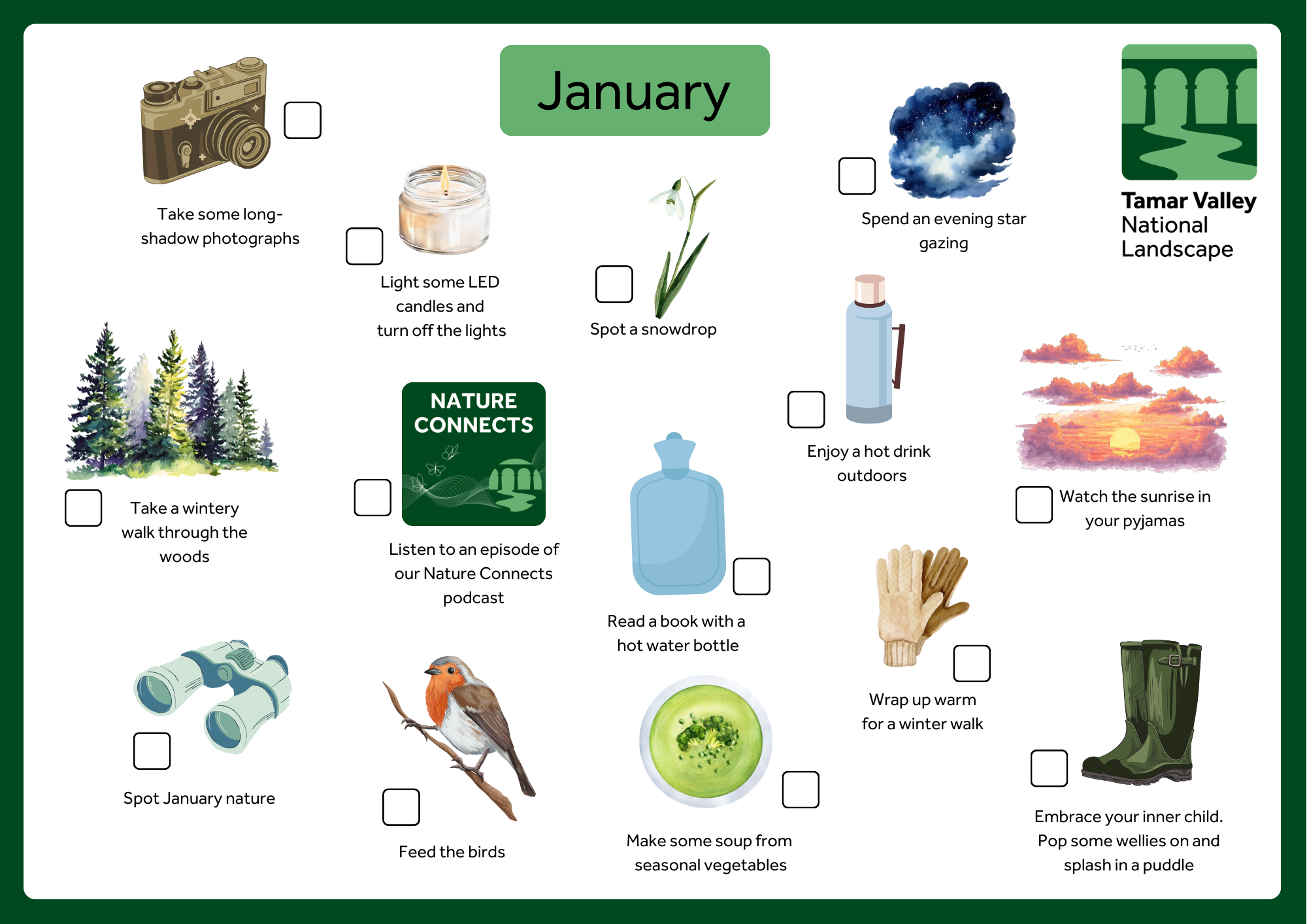
January's Activity Calendar
January is all about trying new things and reaching our goals. Although it’s often a quiet month when many of us prefer to stay cosy indoors, our activities offer a mix of comforting things to do inside, as well challenges that invite you to step outdoors. It’s the perfect time to embrace the crisp winter weather and notice the small but resilient signs of nature that often go unseen at this time of year.

Advice:
When going out in winter it is important to keep your safety at the forefront of your decisions. Winter conditions change quickly. Before heading out:
- Check the weather forecast and plan ahead.
- Check for any maintenance or works, which might prevent you from getting to where you want to go.
- Wear layers to keep warm and shoes with good grip.
- Carry a mobile phone and let someone know the route you plan to take.
- Bring a hot drink in a flask or thermos.
- Bring a torch if you plan to be gone for long.

Further Resources:
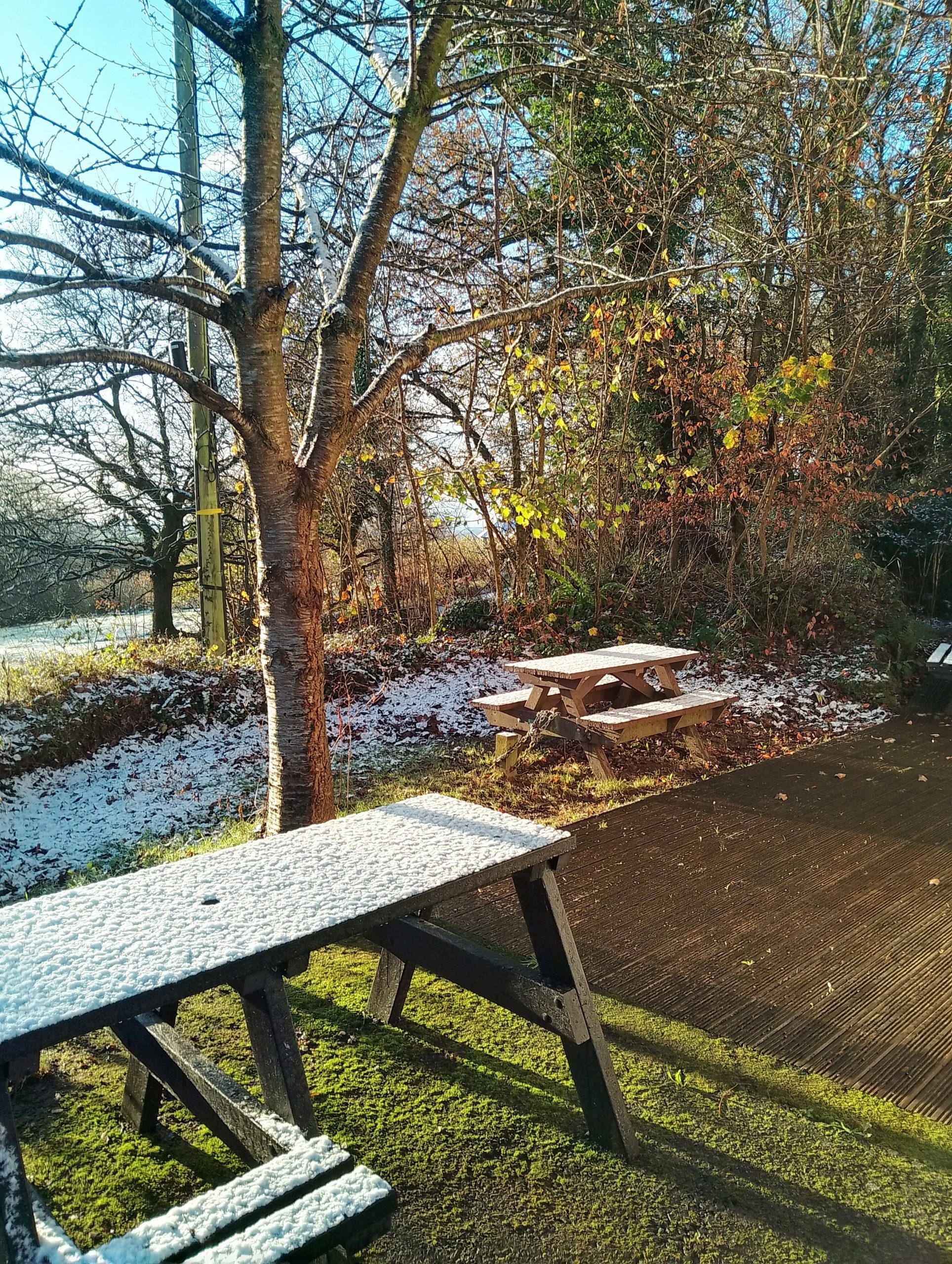
- Winter Photography:
If you have a camera and tripod available, Paul Miguel has some tips for taking winter woodland photographs on YouTube. – (431) Winter Woodland Photography Tips, Techniques & Camera Settings – YouTube - Winter Photography Continued: For any phone users, Love Your Lens has an article about capturing brilliant winter moments. – Freeze the moment: how to take stunning winter photographs |
- Snowdrops in the Tamar Valley:
Visit Tamar Valley have a page all about where you can find snowdrops around the Tamar Valley. – Where to See Snowdrops: The Best Spots for a Magical Winter Walk - Warming Winter Drinks:
For inspiration on a new warming winter drink to take outdoors, BBC Good Food have 58 suggestions. – Winter drinks recipes | Good Food - Bird Feeders:
The Woodland Trust has solutions and instructions for easy bird feeders. – How to Make a Bird Feeder – Woodland Trust - Bird Food: RSPB have an easy recipe for a bird food cake to keep birds full and warm in the winter. – Feed the birds
- Nature Connects Podcast:
For the full list of Nature Connects podcasts you can visit PodBean. – Nature Connects | tamarvalleynationallandscape - Nature Spotter’s Guides:
To find out what nature you could see this month, visit our Nature Spotter’s Guides page.

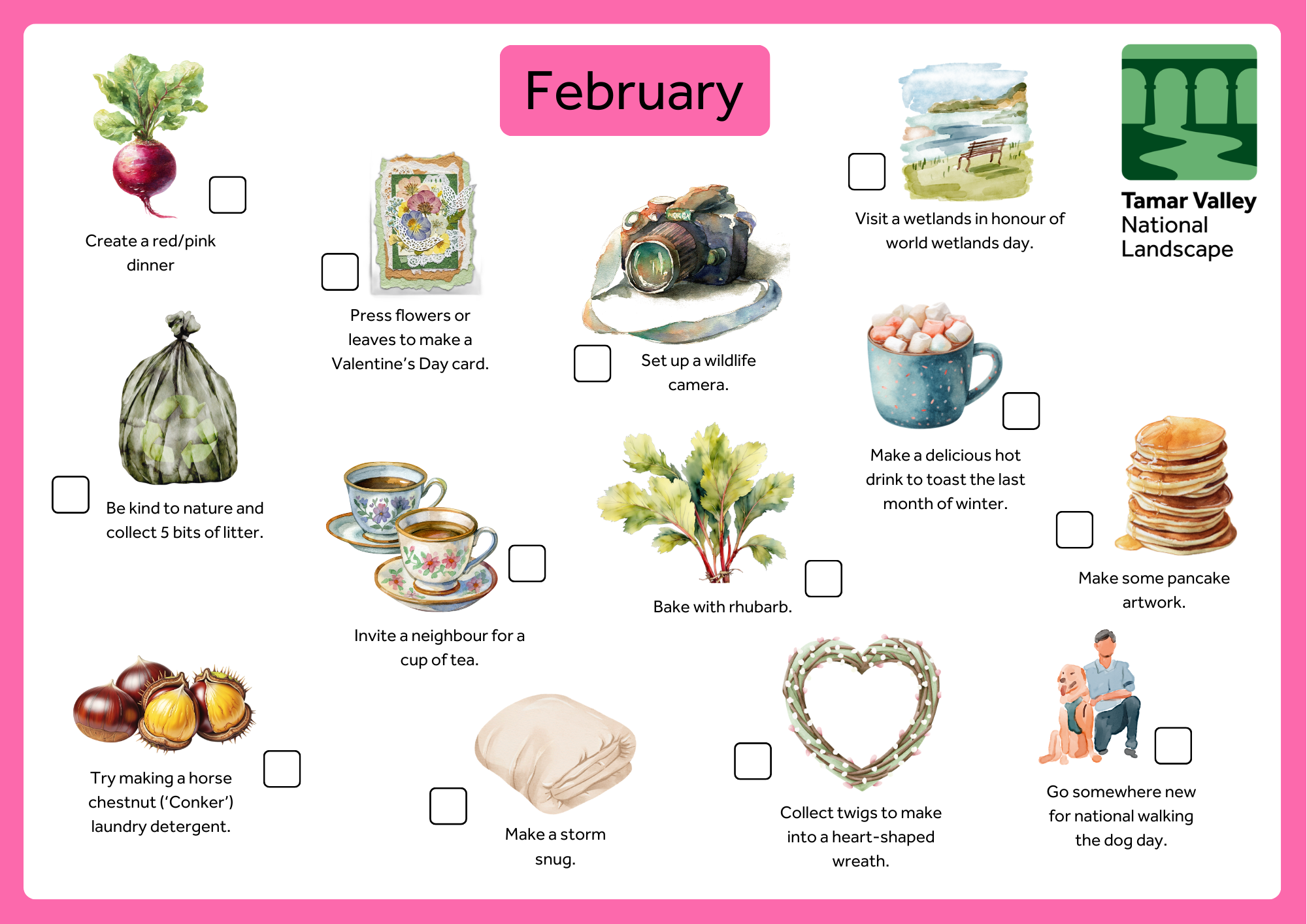
February's Activity Calendar
February is often described as a transitional month, sitting between the darkest point of winter and the first hints of spring. The month’s name comes from the Latin februa, meaning to cleanse. Modern wellbeing writing highlights February as a symbolic period for mental decluttering, renewal, and habit‑refreshing. It is also a time of love, for yourself and others. For all these reasons, this month’s calendar invites you to slow down, savour the small moments, reconnect with nature and others, and nurture a sense of wellbeing and self‑love.
Advice:
February often brings wet and changeable conditions, and it is also a sensitive period for wildlife, with many species beginning to nest, mate, or prepare for new young
Before heading out:
- Check the weather forecast and plan ahead.
- Check for any maintenance or works, which might prevent you from getting to where you want to go.
- Wear layers to keep warm and shoes with good grip.
- Carry a mobile phone and let someone know the route you plan to take.
- Be aware of mud and slippery paths, which you could fall on.
- Bring a torch if you plan to be gone for long.
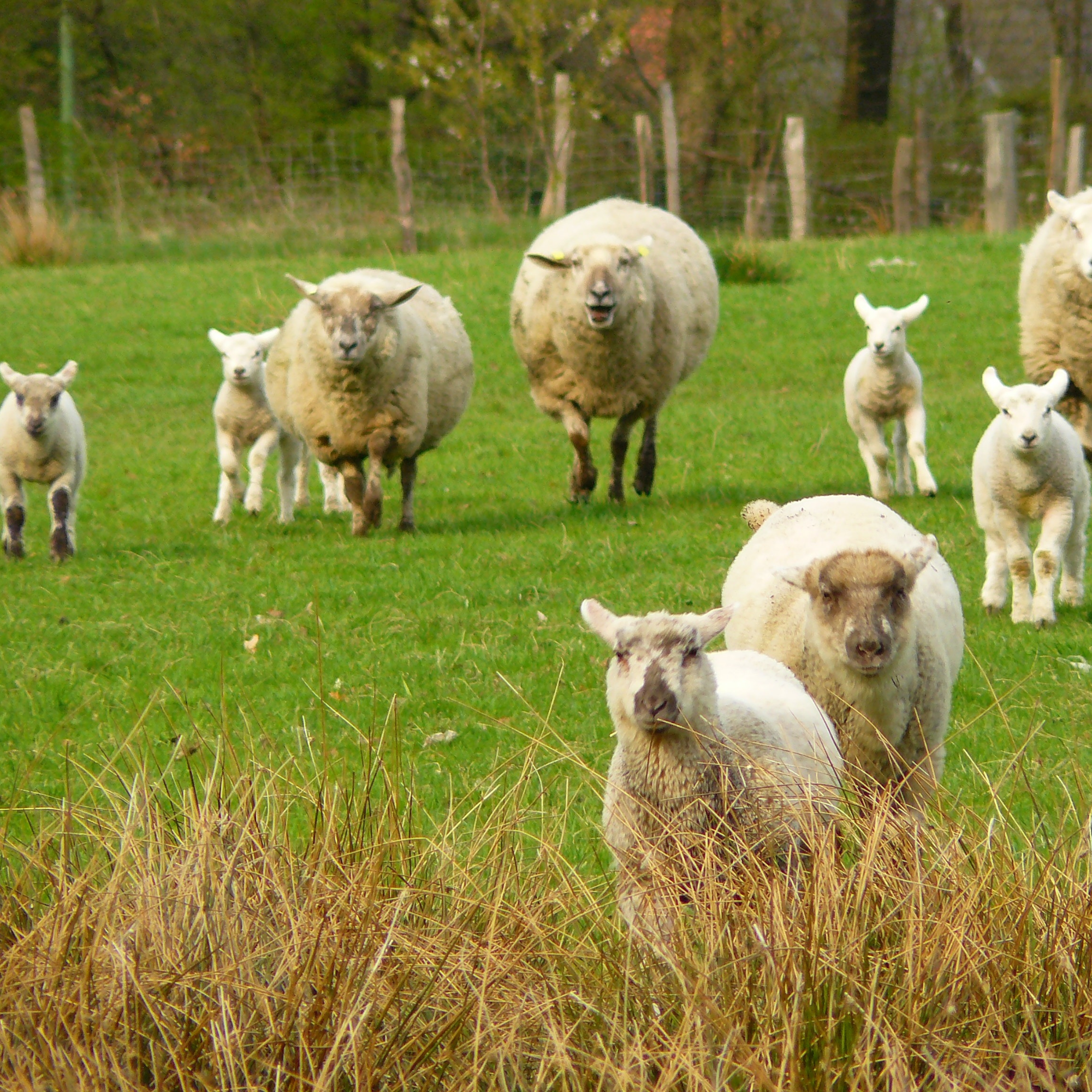
- If you are walking a dog, please follow the countryside code and keep your dog on a lead during lambing seasons and around wetlands.
Other considerations for this month:
- Do not eat any horse chestnuts as they are toxic.
- If you are not 100% sure about any mushrooms be edible, be safe and do not eat them.
Further Resources:
- Horse Chestnut Laundry Detergent:
If you want to try something new this month, there are lots of alternative purposes for Horse Chestnuts, otherwise known as ‘Conkers’. ‘Kitchen and Other Stories’ has created a guide for making your own natural laundry detergent, using Horse Chestnuts. – Natural Laundry Detergent Made With Conkers – Kitchen and Other Stories - Set up a wildlife camera:
If you don’t want to invest in a permanent wildlife camera, you can hire one for us. Email bryony.james@cornwall.gov.uk, or enquiries@tamarvalley.org.uk (after March). - Pressing flowers:
RHS (the Royal Horticultural Society) have some great instructions on how to press your own flowers, what equipment you will need, building your own press and possible gift ideas. – Pressing flowers and leaves / RHS Gardening - Baking with rhubarb:
If you’re not sure how to cook rhubarb, or would like to try a new recipe, The Rhubarb Fool has put together a collection of their favourite rhubarb recipes for you to try. – The Rhubarb Recipe Page – sweet things | The Rhubarb Fool - Making a storm snug:
With so many storms this month, sometimes we all need a bit of comfort. To make a storm snug, you could simply gather your torches and hunker down in a comfy armchair with a book, a flask of your favourite hot drink and a blanket. Or you could embrace your inner child and create a blanket fort. Tasty Home have made a video on how to make a cozy blanket fort for some inspiration. – How To Make The Coziest Blanket Fort Ever | Tasty Home - Collect twigs to make into a heart shaped wreath:
The National Trust have a tutorial for creating lime tree twig hearts. – Make a twig heart | Discover | National Trust
Alternatively, Missie Lizzie has created a range of crafts, including heart-shaped wreaths made out of twigs. – Me and my shadow: How to make rustic twig heart wreaths
March's Activity Calendar
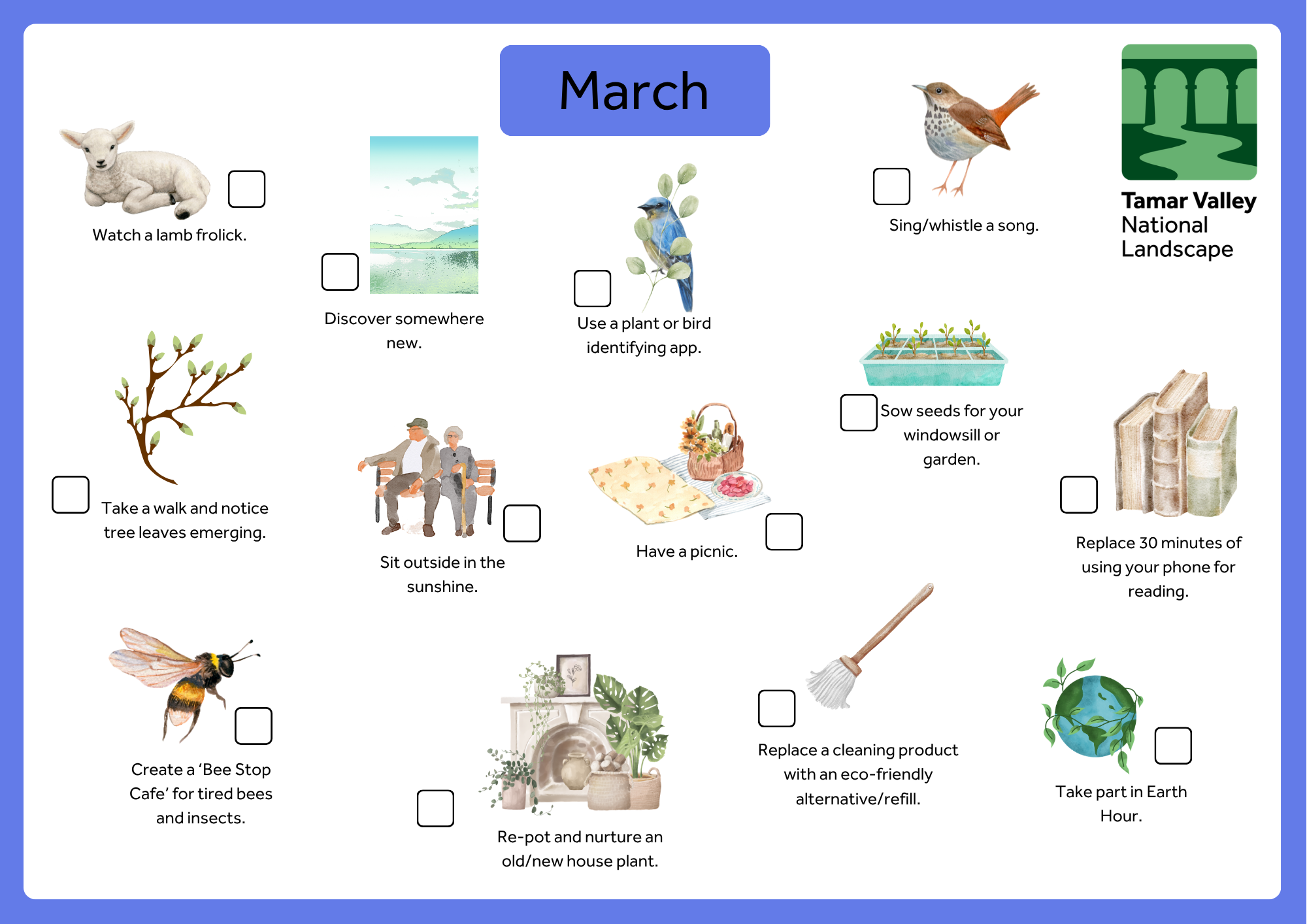
March is a month of transition and preparation. Light increases, the natural world begins to stir, and people often start shifting from inward, winter‑focused routines towards organising and outdoor activity. People tend to be more curious and preparative around this time of year, looking forward to the emergence of spring. This month focuses on activities around this, as well as enjoying time outside in the warmer temperatures and recognising signs of spring.


Further Resources:
- Discover somewhere new:
Discover somewhere new to visit around the Tamar Valley through our ‘Discover and Explore’ webpage: Discover & Explore – Tamar Valley National Landscape Tamar Valley National Landscape - Use a plant or bird identifying app:
There are lots of plant and bird identifying apps for all phone types. However, if you are unsure which ones can be trusted, you can use this article to help you: Best Birdwatching Apps | British Birds, 3 Mobile Apps to Identify Wildflowers on Your Phone – Plantlife - Create a ‘Bee Stop Cafe’ for tired bees and insects:
Creating a ‘Bee Stop Cafe’ can be altered to suit all types of gardens and homes, from simply placing a rock in the middle of a shallow water dish, to planting an insect-friendly flower border. You don’t have to have a garden to make a difference. Here are a few ideas for people with and without a garden.
With a garden: Set up a nectar café | Lincolnshire Wildlife Trust
Without a garden (place on a windowsill or tucked into a wall): BBC – Breathing Places – Make a bee home or café - Sow seeds for your windowsill or garden:
For sowing seeds, you could try using this seed-sowing guide to know when best to sow your seeds: Your Seed-Sowing Year | BBC Gardeners World Magazine
If you have never sown seeds before, here’s a how-to: How to grow from seed – a beginner’s guide – The Tea Break Gardener - Have a picnic:
If you’re looking for cheap picnic ideas, BBC GoodFood has some suggestions: Budget picnic recipes | Good Food
If the weather takes a turn, why not bring your picnic home for a ‘carpet picnic’. - Re-pot and nurture an old/new house plant:
If you’re unsure which pot plants would suit your home, this guide may help: Choosing the Best Houseplants | RHS Advice
For repotting and nurturing your house plants, Hortology have a complete guide: The Complete Guide To Planting Houseplants In Pots & Planters – HORTOLOGY: - Take part in Earth Hour:
Earth Hour is a global WWF initiative that invites people to switch off non‑essential electricals for one hour each March as a symbol of commitment to protecting the planet. You can find out more here: Earth Hour: switch off for our world | WWF

April's Activity Calendar
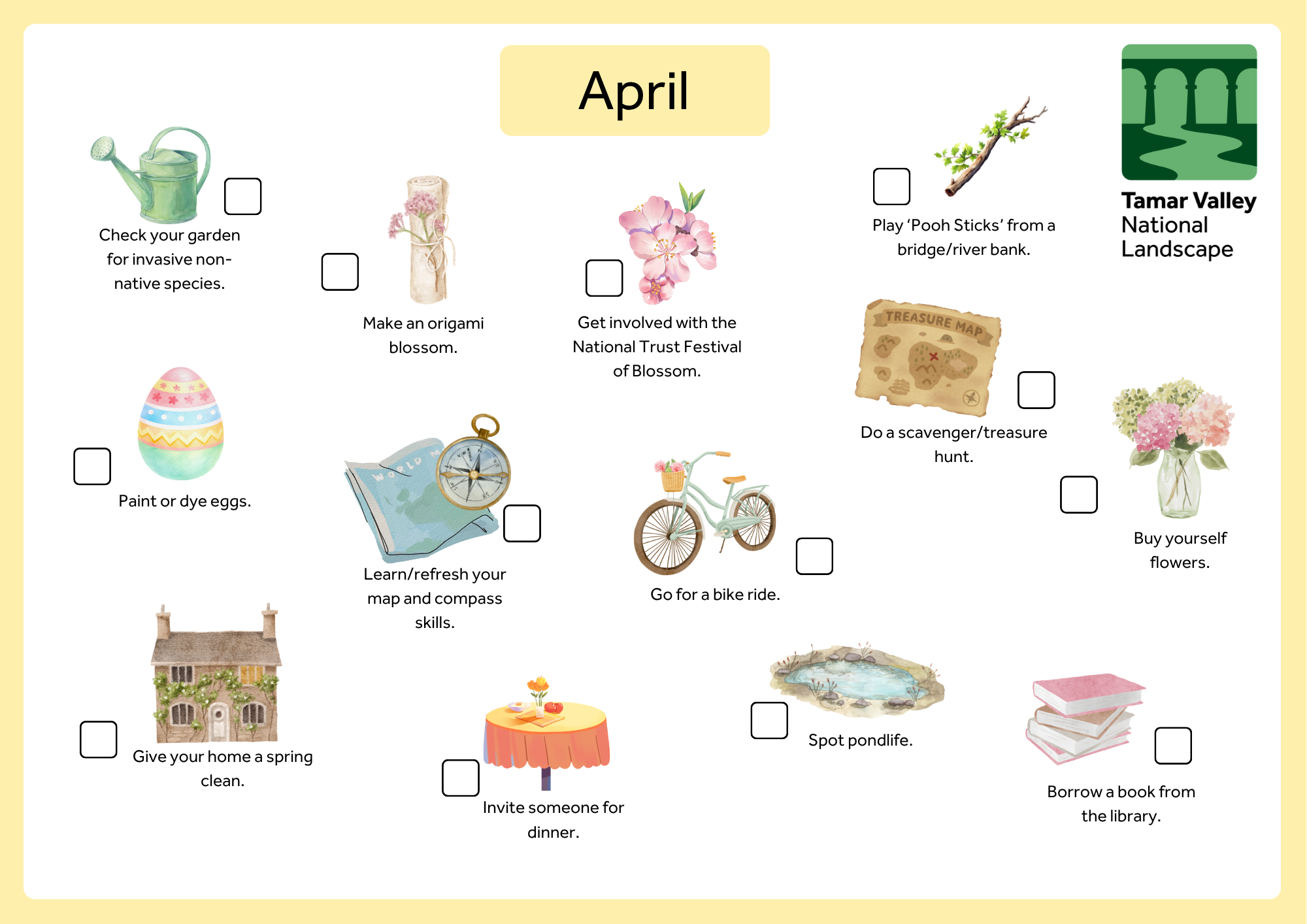
April is filled with new life, burgeoning colour and a renewed energy. The sun is (finally!) shining and the vibrant green from the trees and hedges evokes a desire to get outdoors and explore. This month’s calendar is all about playful exploration, colour and rejuvenation.

Advice:
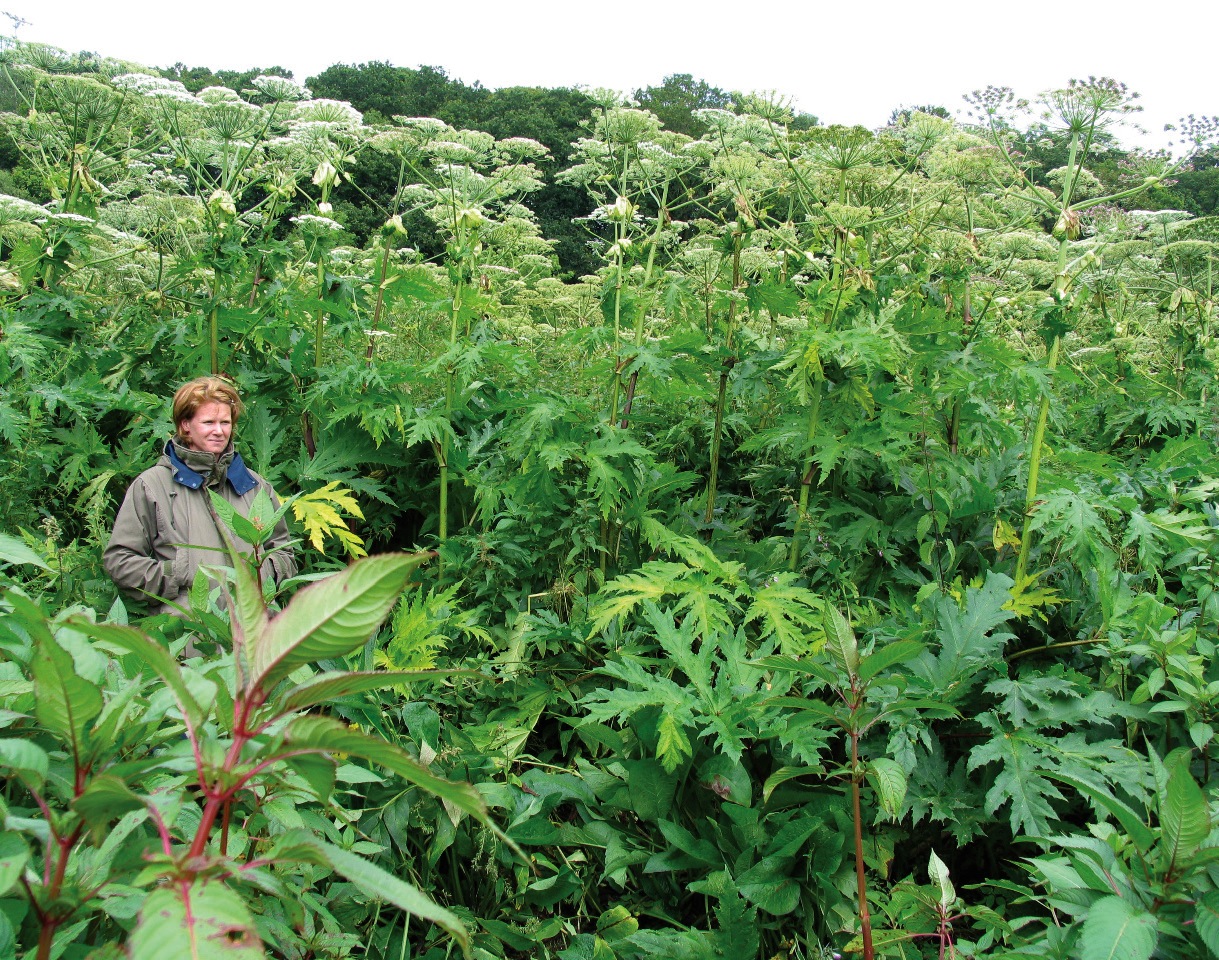
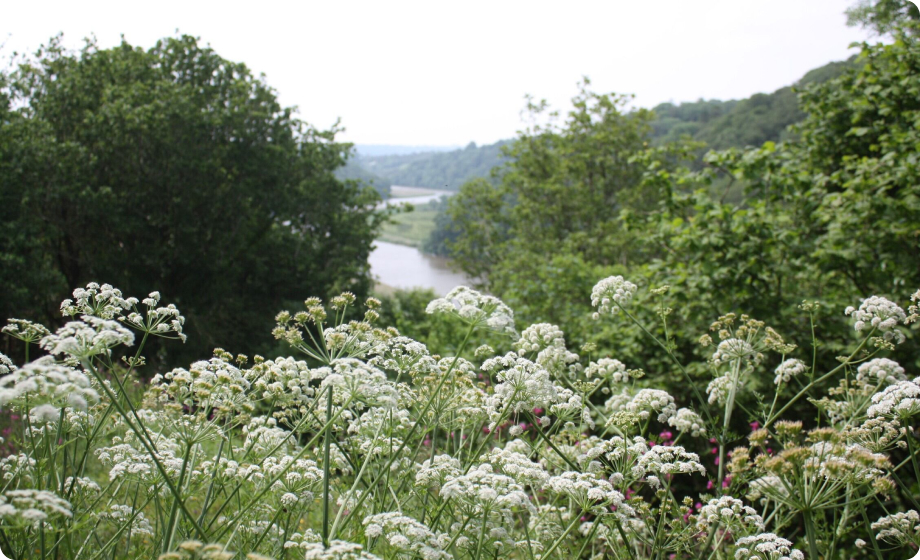
Be careful when removing invasive non-native plants and wear gloves. Some species can be poisonous, such as Giant hogweed and will cause irritation of the skin.
When playing ‘Pooh Stick’, please be river-aware and watch any children you may be responsible for. River-safety information: River Safety Routine | The Rivers Trust

Further Resources:
- Check your garden for invasive non-native species:
You can find out more about our work on invasive non-native plants here: INNS control in the Tamar Valley – Tamar Valley National Landscape Tamar Valley National Landscape
When identifying non-natives on your land, please use the government guidance on disposing of invasive non-native plants: How to stop invasive non-native plants from spreading – GOV.UK - Make an origami blossom:
To make an origami blossom, you can follow the National Trust instructions here: Origami blossom tutorial | National Trust - Get involved with the National Trust Festival of Blossom:
Each year the National Trust holds a Festival of Blossom to celebrate the beauty of blossom varieties in the UK. You can find out more on their website here: Festival of Blossom at Cotehele | National Trust - Play ‘Pooh Sticks’ from a bridge/river bank:
If you have never played Pooh Sticks as a child or need a refresher, there are some instructions on how to play here: PowerPoint Presentation.
You can also play without a bridge by choosing a landmark or easily identifiable finish line, any distance down the river. - Paint or dye eggs:
English Heritage have a simple guide to dye eggs: How to decorate eggs for Easter | English Heritage - Learn/refresh your map and compass skills:
The Ramblers have created a great beginner guide to navigation, which teaches everything from what tools you may need, to using pacing for measuring distance. A beginner’s guide to navigation – Ramblers - Do a scavenger/treasure hunt:
A scavenger hunt is a fun way to observe the changes in the seasons, which you can do as a family or on your own. The Woodland Trust have created a ‘Super Spring Scavenger Hunt’ which can be done at any age. Spring scavenger hunt for kids – Nature Detectives
May's Activity Calendar
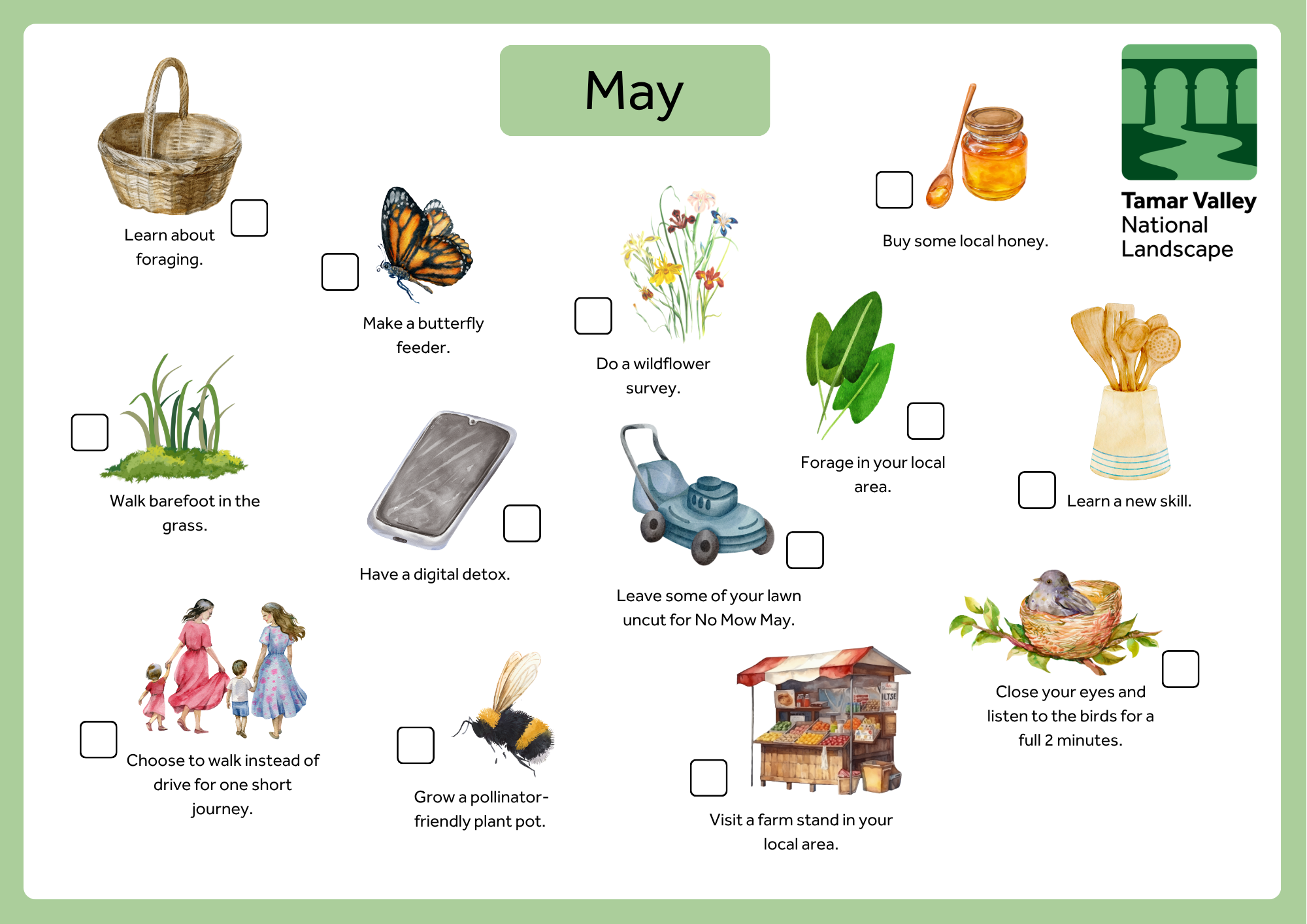
In May, the Tamar Valley has woodlands carpeted in wildflowers, hedgerows bursting into blossom, and birds, bees, and other wildlife filling the air. This month we focus on enjoying the landscape and what it has to offer, as well as participating in this month’s initiatives for celebrating nature and reducing our impact.

Advice:
When foraging please be careful and remember:
- Only pick what you can confidently identify
- Avoid roadsides or polluted areas
- Take small amounts (leave plenty for wildlife)
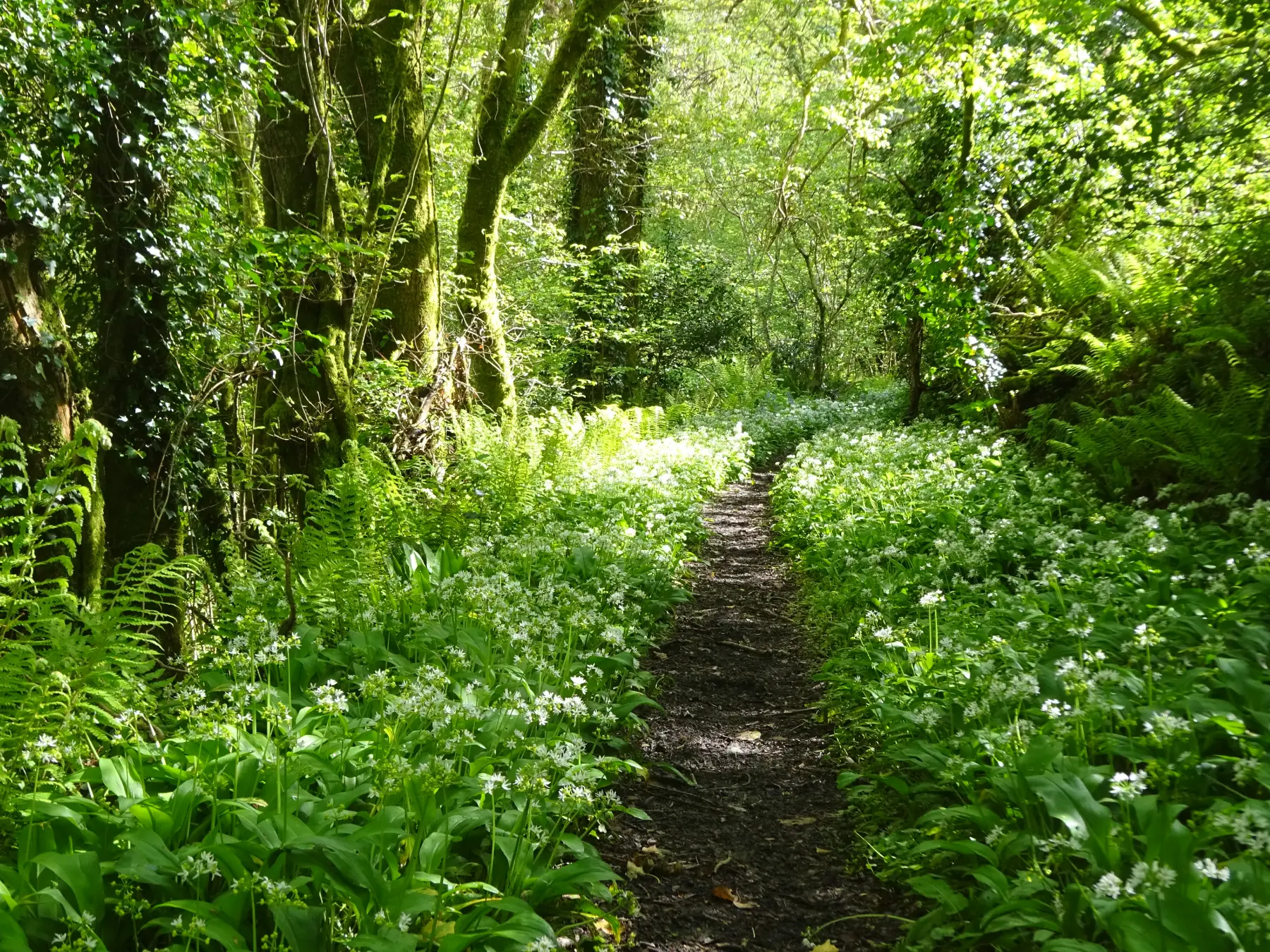
- Some plants have toxic lookalikes (especially wild garlic vs lily of the valley)
Further Resources:
- Learn about foraging and foraging in your area – Woodland Trust have created a guide for foraging and identifying here: Foraging in May: Wild Herbs and Edible Plants – Woodland Trust
- Make a butterfly feeder – The Natural History Museum have great butterfly feeder instructions here: How to make a simple butterfly feeder | Natural History Museum
- Have a digital detox – Health in Mind inform what a digital detox is and how to do so here: Health in Mind | Digital Detoxing
- Grow a pollinator-friendly plant pot – The Wildlife Trust has a useful guide for growing container gardens here: How to create a container garden for wildlife | The Wildlife Trusts
- Do a wildflower survey – The Natural History Museum has a page devoted to wildflower surveys here: Plant and Pollinator wildlife surveys | Natural History Museum
- No Mow May – Plantlife’s No Mow May Movement
- Learn a new skill – Rest Less have 12 new skills you could try and how to go about it: 12 new skills that you can learn from home and how to get started
ebulletins
The Tamar Valley National Landscape team (hosted by Cornwall Cornwall) is committed to gathering and processing personal data with full regard for the General Data Protection Regulation (GDPR). Please view our Privacy Statement for further information here. A copy of MailChimp’s Privacy Policy can also be viewed here.